







INTRO
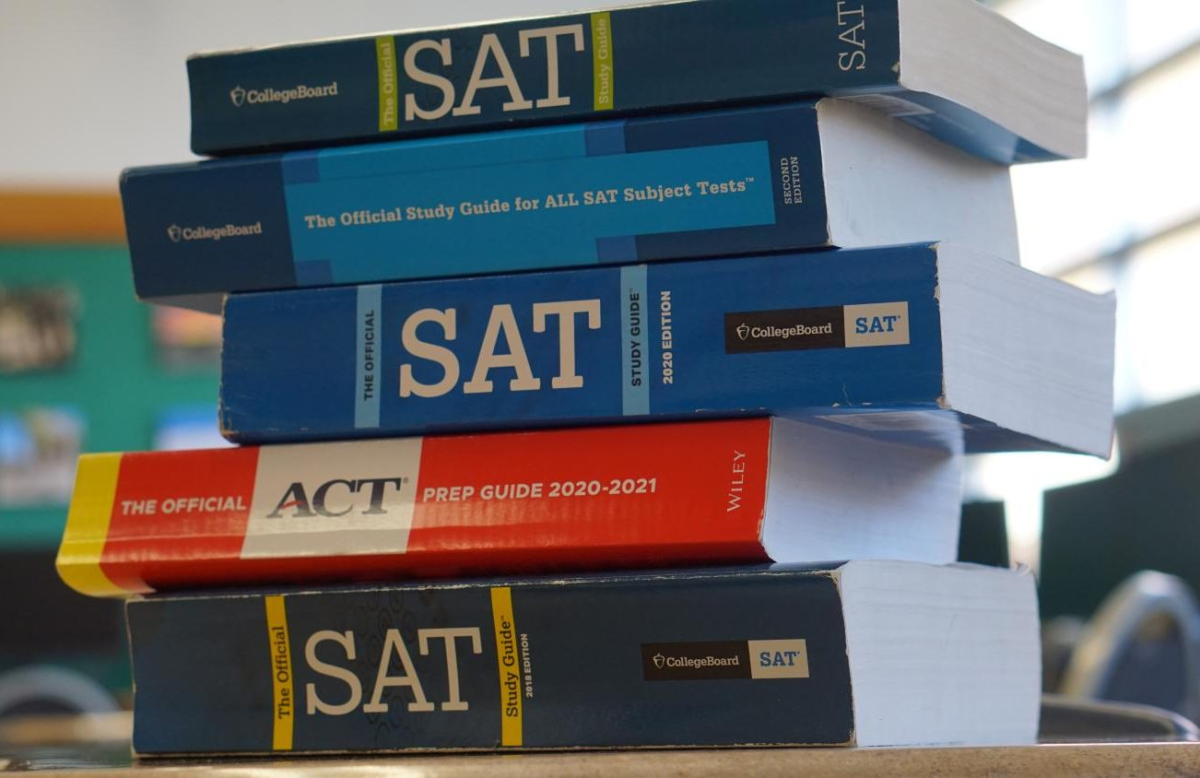
It’s that time of the year again, Knights, or at least it was, (but will be again), for the SAT! The SAT & ACT exams are typically offered in October of each year, so the opportunity to take the SAT has already passed, except for juniors, who were offered an opportunity to take it this upcoming March sixth, but this is sign-up only and the deadline to sign-up has already passed. Nevertheless, it’s still a good idea to prepare now, even if you’ve already taken it because you could improve! (It should be noted that our school does not offer the ACT, which is more common to the East Coast, but it can still be taken here in the area. You can find official ACT testing centers at act.org.) Most colleges feature the SAT & ACT as optional in the application process (although it would definitely help you to include your score(s) if you have them and they’re good, or at the very least show growth over time or proficiency in a particular area). The more elite and prestigious institutions, however, do require either an SAT or ACT score. It is generally recommended to have at least one standardized score for either test by the end of your junior year to accommodate your college applications in your senior year. If you don’t have a score by that time, you likely won’t have one for your application(s). So it’s time to prepare!
THE SAT & ACT
For those who don’t know much about the SAT or ACT, here’s what to expect. Both are high-stakes college entry assessments used to measure college readiness. The SAT is now fully digital via BlueBook, while the ACT can be taken both digitally and on pencil and paper. The SAT consists of two main sections with two modules each: one consisting of reading & writing and the other consisting of math—mainly algebra and geometry. The SAT is adaptive, meaning that the difficulty of the second section will be determined in real time based off of your performance on the first. Math formulas plus a graphing calculator are provided, and the reading passages are shorter than the ACT’s, with one question per passage as opposed to nine. Scientific reasoning is integrated across the two sections. The SAT is shorter, with 98 questions during a period of 134 minutes, allotting more time per question, as opposed to the ACT, with 131 questions (171 questions with the optional science section), both ACT options allotting about 58 seconds per question. The ACT also has reading and math sections (with the math section being more advanced), as well as an English section covering grammar, usage, and rhetoric skills. The ACT now features an optional science section (40 questions during 35 minutes) and writing test (1 essay evaluating analytical writing skills during 40 minutes). The SAT is graded on a scale of 400-1600, with a maximum of 800 possible points per section, while the ACT is graded on a scale of 1-36 for each of the four (one optional) sections, with the final composite score being the rounded average. With that being said, please note that all colleges accept the SAT & ACT equally, meaning you can decide on which one to take when considering your goals or preferences.
HOW TO PREPARE
THE SAT:
CollegeBoard is the organization behind the SAT, and for those of you who have already taken the PSAT or SAT you should’ve received a unique code on the returned results paper. Punching that code into the CollegeBoard website while logged in not only allows you to view your score but also to take personalized practice tests, catered to your performance. This means it will skip over subjects you’ve already done well on and focus more on what you missed. Apart from this, extensive free practice is also available in the form of several full length practice tests on BlueBook (the SAT testing platform) and official test-prep courses on Khan Academy. The CollegeBoard account dashboard also features a daily real SAT question of your choice of either math or reading/writing. Key areas of study for the SAT include but are not limited to: English conventions, information comprehension, textual analysis, words in context, algebra, data analysis & contextual problem-solving, geometry, trigonometry, and non-linear equations.
THE ACT:
The official ACT website has 2 free full length practice tests available for download or print as PDFs as well as short area-focused quizzes (of which there are 3 for each of the four subjects), and a daily ACT question, similar to the CollegeBoard website. Other than these, there exist only paid options for official test-prep, so I would recommend you take advantage of what they do provide, and perhaps reuse Khan Academy’s test-prep courses for the SAT. For the standard ACT (with no optional sections added), key areas of study include many of the same subjects as the SAT, but with higher emphasis on geometry, trigonometry, and data analysis. As a final note, as with any preparation for a test, don’t burn yourself out practicing! I would recommend taking the practice version of either exam, then focusing on the areas you did worse on with short quizzes or otherwise concentrated studying. As testing dates loom ever closer, it’s good to set healthy practice habits.