




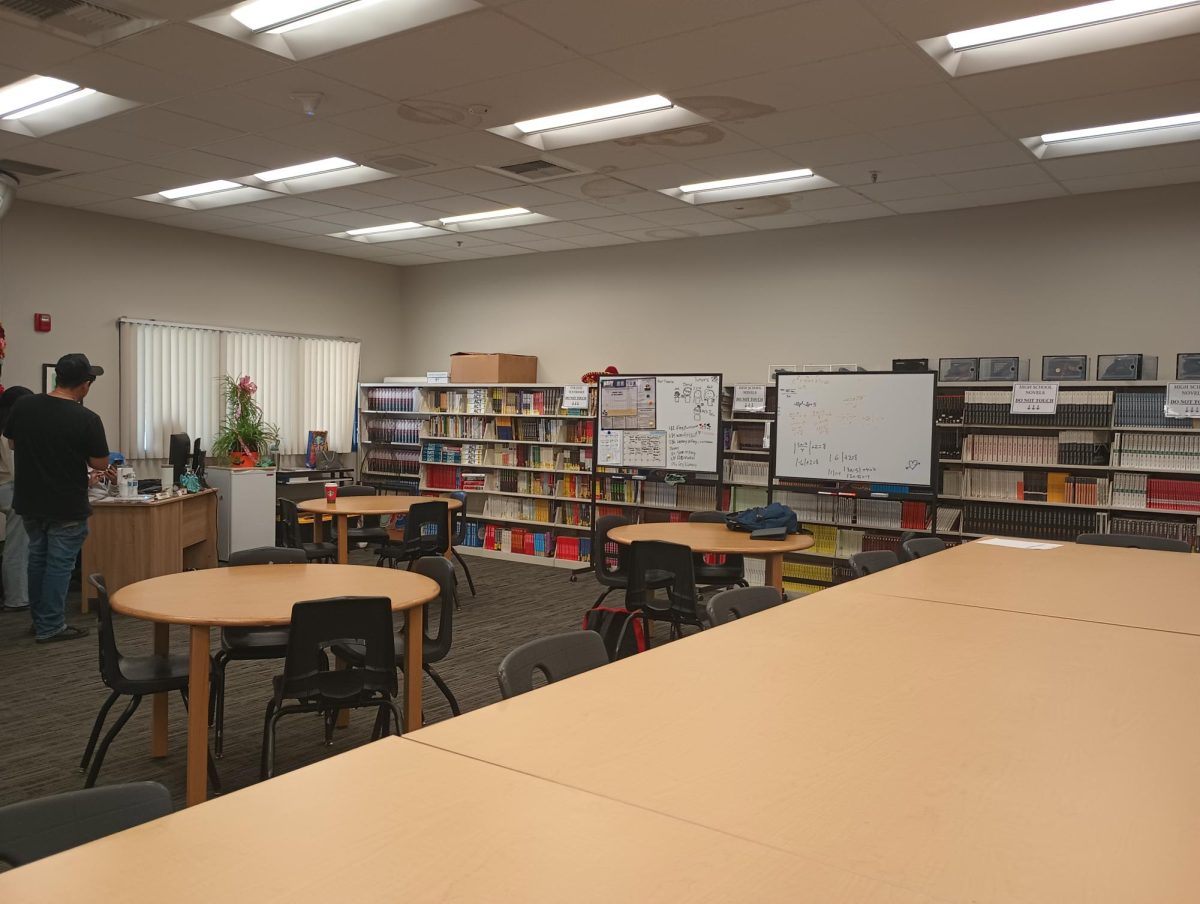
Classwork can be hard, especially with Finals Week growing ever closer, and classes progressing in their material. Sometimes it can just be overwhelming, not to mention time-consuming. And with many participating in time-consuming early college classes, sports, or other extracurriculars, it’s no wonder that many are struggling with some of their classes. Is this you? Are you struggling with some of your classes, or just want some help understanding material? If so, then don’t worry. The tutoring center may be able to help.
The Tutoring Center
The tutoring center is located in the library (previously in the 400 block), to the right after passing the wellness center and is managed by Ms. Torres. The tutoring center has been operating for at least 7 years according to Torres, and covers a variety of subjects, though mainly math & science; the former of which is what most people struggle with the most, according to David Sanchez, one of the college tutors who has been tutoring for 4 years. The center is available from 7:30am through 4:30pm on Monday through Thursday, and from 7:30am to 3:00pm on Fridays. It currently has 5 peer-tutors (of which, I am one of them actually), and 3 standard college tutors; most going out and visiting classrooms or staying in the library during the morning.
Tutors are commonly available during lunch in the library as well. If you need help with any subject, you are welcome to come in and receive tutoring in the library by one of the tutors. In mine and a fellow peer-tutor friend’s personal experience, many people don’t actually come in to get tutoring, yet often I hear how my friends and friends of friends are struggling with their classes, so please don’t be afraid to ask for help! “Never be afraid to ask for help! Tutors want you to succeed”, David said. David personally struggled as well and “wanted to immerse [himself] in an academic setting”, which he told me in an interview is the reason he became a tutor. “My favorite part of the job is watching students improve, seeing students who used to struggle continue to be tutored and excel”, he said. According to Ms. Torres, the tutoring center is actually in need of peer-tutors! So if you’re good in a subject and can teach it to others, see Ms. Torres in the library if you would like to become a peer-tutor and give back to the community.
Tips From a Tutor
If tutoring just isn’t your thing, I get it, because I’m the same way. I never got in-person tutoring and preferred to just learn things on my own, because that’s how I learn best. Here are some tips that helped me when I was confused. First of all, and this one’s probably common knowledge, but try not to just memorize things but rather understand them. I remember learning about simplifying radicals in math and didn’t understand how it worked. Even after looking up a how-to video, I could do it but still didn’t understand why the process worked. So I conducted a thought experiment using known rules about radicals, and personally discovered why the process worked. Will this always help you on tests or quizzes? Not necessarily. Is it helpful though? Absolutely. Learning the how and why of things rather than just memorizing rules not only can make you more adaptable to new types of problems, but promotes critical thinking and honestly makes things more enjoyable and interesting.
Secondly (these tips apply more to math), looking up answers and using AI tools like PhotoMath responsibly is okay. Now, don’t hear what I’m not saying. I’m not saying it’s okay to cheat. Last year I studied Algebra-2 on my own while enrolled in geometry, and sometimes the problems I got were really confusing, and I had no idea how to solve them. So sometimes I would use PhotoMath because it gave me a step-by-step explanation on how to solve the problem, which helped me further understand the process and the reasoning behind certain things, similar to the first tip I listed. As for looking up answers, always try problems on your own first before searching up solutions, and don’t use them like a crutch because you won’t be learning anything that way. Looking at answers can reveal mistakes in your work and again help you understand the problem-solving process. These two tips are basically an extension of the first.
Lastly, following along with your math or science class with something like Khan Academy can really help you understand the material if, say, something wasn’t explained very well. I find that the videos on Khan Academy describe topics in a really intuitive, clear way and often include explanations on how things like math formulas or physical laws were derived or discovered. So if you’re wondering how some mathematical formula or law of physics came to be, Khan Academy can probably help you.